MeetYourClinic Editorial Team
Medical Tourism Research · Updated Feb 2026
Quick Summary
A practical 2026 cost guide to Sapphire FUE hair transplants, comparing UK vs Turkey prices, what packages really include, and the red flags that protect your donor and your wallet.
If you are comparing a Sapphire FUE hair transplant in the UK vs Turkey, the price difference can feel almost too big to be true. It is real, but it is not magic. You are usually comparing two very different ways of pricing (per-graft vs packages), different staffing models, and different approaches to aftercare and accountability.
This guide breaks down typical 2026 costs, what clinics mean by “Sapphire”, what should be included, and the red flags that matter more than the headline price.
Quick Summary
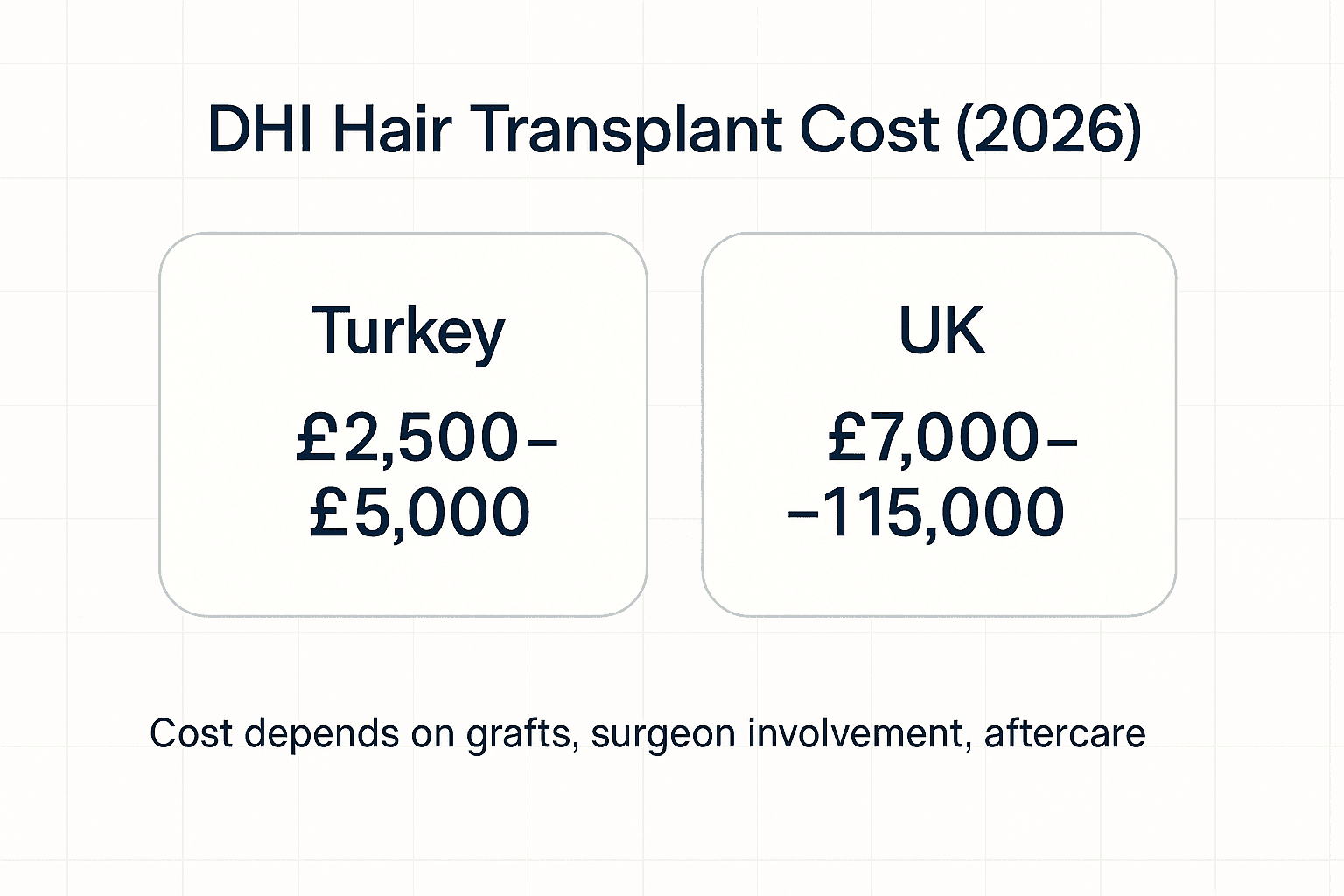
- Typical Sapphire FUE price in Turkey (package model): roughly £1,800 to £3,500 for many straightforward cases, with higher prices for surgeon-led clinics, complex work, or premium aftercare.
- Typical Sapphire FUE price in the UK (per-graft model): roughly £4,000 to £10,000+, depending on graft count, surgeon, and whether the clinic prices per graft or per session.
- The biggest reason prices differ is not the sapphire blade. It is usually labour costs, clinic overheads, insurance, regulation, and how much of the procedure is surgeon-led.
- Sapphire does not change the fundamentals: you still need the right patient selection, careful graft handling, realistic graft numbers, and a clear plan for hair loss progression.
- Your real cost can double if you need a second trip (touch-up, repair, or follow-up) or if the “package” quietly excludes essentials.
If you want a broader baseline first, read Hair transplant cost (2026): full guide, plus the destination-specific breakdowns for UK costs and Turkey costs and how packages work.
What “Sapphire FUE” actually means (and what it does not)
Most clinics use “Sapphire FUE” to describe FUE where the recipient-site incisions (the tiny channels that receive grafts) are made with sapphire blades instead of standard steel blades.
A few practical points to keep your expectations grounded:
- The extraction is still FUE. Follicles are removed one by one using a punch (manual, motorised, or robotic). The “sapphire” part is usually about the incision tool, not the extraction. [5][7]
- Blade material is only one variable. Outcomes depend heavily on planning the hairline, graft survival, graft placement angle and direction, and donor management.
- Independent evidence is limited. Sapphire blades are widely marketed as allowing finer incisions and potentially less tissue trauma, but patients should treat bold promises (for example “guaranteed density” or “no swelling”) as marketing rather than medical certainty.
For a clear comparison of the main technique labels clinics use, see FUE vs DHI hair transplant (2026): what’s the difference?.
Sapphire FUE cost in 2026: UK vs Turkey (typical ranges)
There is no single “correct” price. What you can do is compare like with like.
Table 1: Typical price ranges by graft band (UK vs Turkey)
These bands are common planning ranges for male pattern hair loss. Your surgeon may recommend fewer grafts if you have limited donor supply, fine hair, or a high risk of future loss.
| Graft band (approx.) | Turkey (package clinics) | Turkey (surgeon-led / premium) | UK (typical per-graft or per-session) |
|---|---|---|---|
| 1,000 to 1,500 | £1,500 to £2,500 | £2,500 to £4,000 | £3,500 to £6,000 |
| 1,500 to 2,500 | £1,800 to £3,200 | £3,000 to £5,000 | £5,000 to £8,500 |
| 2,500 to 3,500 | £2,200 to £3,800 | £3,800 to £6,500 | £7,500 to £12,000+ |
| 3,500 to 4,500 | £2,800 to £4,500 | £5,000 to £8,500+ | £10,000 to £16,000+ |
How to read this table:
- Turkey ranges are often quoted as packages rather than per graft.
- UK ranges are often per graft (with minimum fees) or per session.
- “Premium” in Turkey usually means higher surgeon involvement, lower daily volume, stronger aftercare, and clearer accountability.
Table 2: Package pricing vs per-graft pricing (why the maths looks odd)
| Pricing model | Common in | What you get | Where it can go wrong |
|---|---|---|---|
| Package (fixed price) | Turkey | A single headline figure that may include hotel and transfers | You may not be told the real graft count, or the package may encourage doing “as many grafts as possible” to sound like value |
| Per graft | UK (and some Turkish surgeon-led clinics) | Cost scales with graft count, which can feel fairer and more transparent | Per-graft prices can incentivise upselling graft numbers unless the surgeon is conservative |
| Per session / day rate | UK (some clinics) | Predictable fee even if graft count varies slightly | Sessions can still hide who is doing which steps and how many patients are treated per day |
What makes Sapphire FUE cost more than “standard FUE”?
When Sapphire is genuinely priced higher, it is usually because:
- Consumables and tools can be more expensive (sapphire blades are not free).
- Some clinics position it as a premium workflow (smaller incisions, different implanter strategy, slower pace).
- Marketing: “Sapphire” is a recognisable label and clinics charge more because demand allows it.
But in real-world quotes, the largest cost drivers are still:
- surgeon time and reputation
- staff-to-patient ratios
- how many patients the clinic does per day
- aftercare structure and responsiveness
- complication management and insurance
What should be included in a Sapphire FUE quote?
A quote is only useful if you can tell what is included and what you will pay extra for.
In the UK, a good quote usually includes
- Pre-op consultation and assessment (in-person or video, plus clear photos)
- The surgery fee (including anaesthetic, theatre time, and clinical staff)
- Immediate post-op kit and instructions
- Scheduled follow-ups (often at 2 weeks, 3 months, 6 months, 12 months)
- Clear policy for complications and revisions
The NHS notes that hair transplants are cosmetic and are not usually provided by the NHS, and that independent clinics providing cosmetic surgery in England must be registered with the CQC. This is worth checking when you are comparing providers in the UK. [1]
In Turkey, packages often include (but you must confirm)
- A pre-op consultation (often on arrival)
- The surgical day(s)
- Local anaesthetic
- Hotel (typically 2 to 4 nights)
- Airport transfers
- Post-op wash (often day 1)
- A basic medication kit (sometimes antibiotics, pain relief, anti-swelling tablets)
What you should ask for in writing:
- Whether PRP is included and if it is optional
- Whether post-op medication is included and what exactly (brand and duration)
- Whether blood tests are included (and which ones)
- Whether translation is included on the day
- Whether the surgeon is named and will be present for key steps
Ready to Compare Clinics?
Get verified quotes from top-rated procedures clinics. Compare prices and reviews in minutes.
Hidden costs (the bits that move your “real” price)
People rarely regret paying a fair price. They regret being surprised.
Common hidden costs in both the UK and Turkey
- Finasteride or minoxidil (ongoing, optional, but often recommended)
- Time off work (usually 7 to 14 days for visible recovery, longer for physical jobs)
- Travel and meals (even when hotel is included)
- Aftercare products (saline spray, gentle shampoo, neck pillow)
Turkey-specific hidden costs
- Upgrades to a better hotel or extra nights if swelling or scabbing is heavy
- Extra baggage (if you are travelling with post-op supplies)
- Second-trip costs if follow-up care is limited to WhatsApp
- Interpreter fees if not included
UK-specific hidden costs
- Consultation fees (some clinics deduct these from surgery cost, some do not)
- Revision policies: some quotes look cheaper until you read the terms for touch-ups
The second trip problem (and why it matters in 2026)
A hair transplant is not a one-and-done purchase. It is a clinical journey.
Even if the surgery itself goes well, you might need a second trip because:
- you need a touch-up for patchiness
- you have shock loss and want reassurance and monitoring
- you develop folliculitis or persistent redness that needs in-person review
- you later need a second procedure as hair loss progresses
UK sources that advise on surgery abroad consistently warn that follow-up and dealing with complications is harder when you travel, and that the NHS is unlikely to provide routine follow-up for private treatment abroad. [2][3][4]
If you are considering Turkey primarily to save money, do a realistic “two-trip” budget. It can still be good value, but you should know your worst-case number.
Table 3: A realistic “two-trip” budget example (Turkey)
| Cost item | Typical range |
|---|---|
| Package surgery fee | £1,800 to £3,500 |
| Flights (UK to Istanbul, return) | £150 to £400 |
| Extra nights / hotel upgrades | £100 to £400 |
| Food and local transport | £150 to £350 |
| Second trip (if needed) | Add £400 to £1,200+ |
Red flags that should stop you booking (even if the price is tempting)
You do not need to be an expert to spot risk. You just need a checklist.
Red flag 1: No named surgeon, or “the team will decide on the day”
If you cannot get the name of the operating doctor in writing, you cannot properly check credentials, experience, or accountability.
Red flag 2: You are pushed to pay a deposit immediately
A reputable clinic will give you time to think. High-pressure tactics are a warning sign.
Red flag 3: Unlimited grafts or a “4,000 to 5,000 grafts for everyone” package
Graft count should be based on your donor, hair calibre, scalp laxity, and long-term plan. “Unlimited grafts” can lead to overharvesting.
Red flag 4: The clinic dismisses medication, future hair loss, or long-term planning
A trustworthy surgeon will talk about stabilising loss and what happens if your hair continues thinning after the transplant.
Red flag 5: You are promised a guaranteed density or a guaranteed outcome
Hair transplant surgery has variability. Ethical clinicians explain what they can control and what they cannot.
Red flag 6: Heavily filtered photos, no consistent lighting, no timeline
Look for results shown at clear milestones (for example 1 month, 6 months, 12 months). Be wary of “after” photos taken in different lighting or with fibres.
Red flag 7: The consultation ignores donor area assessment
A proper plan starts with donor management. If the clinic focuses only on your hairline design, that is incomplete.
Red flag 8: No plan for complications, no clear aftercare pathway
The NHS and professional bodies emphasise the importance of understanding follow-up arrangements, especially when surgery is abroad. [2][3]
Questions to ask any Sapphire FUE clinic (copy and paste)
Use these questions to force clarity and make quotes comparable:
- Who will do each step? (extraction, incisions, placement)
- How many patients are you treating that day?
- What graft count range are you estimating and why?
- How will you protect my donor area for the future?
- What is your policy if growth is poor at 12 months?
- What aftercare is included and how often are follow-ups scheduled?
- What complications do you see most often and how do you manage them?
- Can I speak to a former patient with a similar hair type and hair loss pattern?
- What is the total price including medication, blood tests, and aftercare products?
- If I am travelling, what happens if I need an in-person review? Who pays?
FUE vs Sapphire FUE vs DHI (a practical comparison)
Most patients are deciding between labels rather than different end goals. Here is the plain-English version.
| Option | What it is | Who it suits | The trade-offs |
|---|---|---|---|
| Standard FUE | Follicles extracted by punch; channels made with steel blade/needle; grafts placed with forceps or implanter | Most candidates | Outcome depends more on team skill than tool branding |
| Sapphire FUE | FUE where channels are made with sapphire blades | People who want a premium workflow and a clinic that genuinely uses it carefully | Often higher cost; evidence claims can be over-marketed |
| DHI | Usually FUE extraction, with placement using an implanter pen (often fewer steps between channel creation and placement) | Often marketed for no-shave or finer work, depending on clinic | Can be slower and more expensive; still varies by operator skill |
If you want a deeper technique breakdown and what to look for, read FUE vs DHI hair transplant (2026).
How to compare UK and Turkey clinics fairly (a simple framework)
Price is not your only variable. Create a one-page comparison for each clinic:
- Surgeon: name, credentials, how many years doing FUE, membership of relevant professional bodies
- Daily volume: how many patients per day, and what the surgeon personally does
- Plan: graft estimate, hairline design rationale, donor strategy, long-term thinning plan
- Aftercare: schedule, in-person vs remote, response times
- Revision policy: what happens at 12 months if growth is poor
- Total cost: including travel, meds, time off work, and a contingency budget
For destination-specific checklists, use our guides: UK and Turkey.
FAQs (real searches people type)
1) How much does Sapphire FUE cost in Turkey in 2026?
Many clinics quote a package price, often roughly £1,800 to £3,500, but surgeon-led clinics and more complex cases can be higher. Always confirm the surgeon’s role, what is included, and what happens if you need follow-up.
2) How much does Sapphire FUE cost in the UK in 2026?
UK pricing is commonly per graft or per session, and many patients see totals around £4,000 to £10,000+ depending on graft numbers and the clinic. Make sure you understand what is included in aftercare and revision policies.
3) Is Sapphire FUE better than normal FUE?
Sometimes it is simply a different incision tool. A careful surgeon and a good team matter more than whether the blade is sapphire or steel. Treat bold claims as marketing unless the clinic can explain their technique and show consistent results.
4) Why is Turkey so much cheaper than the UK for hair transplants?
Lower operating costs, different pricing models (packages), and higher procedure volumes can reduce prices. The trade-off can be harder follow-up and variable standards between providers. UK guidance on surgery abroad highlights the importance of aftercare and knowing what happens if something goes wrong. [2][3]
5) What does a Turkey hair transplant package usually include?
Often the surgery, hotel, transfers, and basic aftercare are included, but you must confirm details such as medication, blood tests, interpreter support, and who performs each step.
6) Are “unlimited graft” packages safe?
They can be risky. Your donor area is finite. Overharvesting can cause visible thinning at the back and sides and can limit future options.
7) How many grafts do I need for a Sapphire FUE hair transplant?
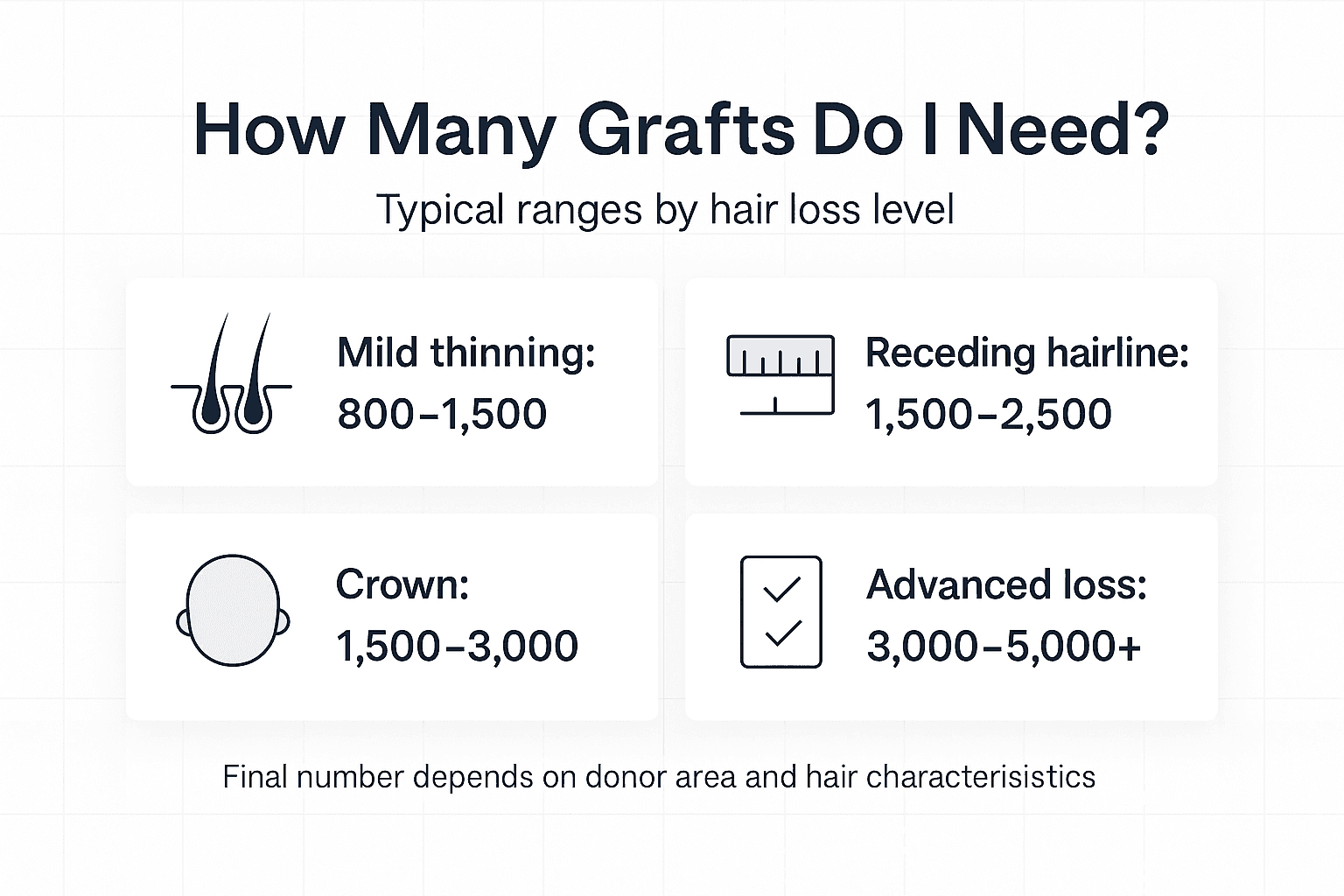
Common plans range from 1,500 to 3,500 grafts, but the right number depends on hair calibre, donor density, and future hair loss. A clinic should explain the reasoning, not just sell a big number.
8) What are the red flags for a bad hair transplant clinic?
No named surgeon, pressure deposits, guaranteed outcomes, inconsistent photos, very high daily volume, and vague aftercare are major red flags.
9) Can I fly back to the UK straight after a hair transplant?
Many people do, but you should follow the clinic’s advice. Swelling and discomfort can peak in the first few days. If you are travelling, plan for a buffer day and know who to contact if you have concerns.
10) If I have complications after surgery abroad, will the NHS fix it?
UK guidance notes the NHS is unlikely to provide routine follow-up for private treatment abroad, and may only help if there is a serious complication requiring emergency care. Plan and budget accordingly. [2][3]
Sources
- NHS. Hair transplant (includes advice on choosing a clinic and CQC registration in England). https://www.nhs.uk/tests-and-treatments/cosmetic-procedures/cosmetic-surgery/hair-transplant/
- NHS. Cosmetic surgery abroad (risks, standards, and follow-up responsibility). https://www.nhs.uk/tests-and-treatments/cosmetic-procedures/advice/cosmetic-surgery-abroad/
- Royal College of Surgeons of England. Thinking of having cosmetic surgery abroad? https://www.rcseng.ac.uk/patient-care/cosmetic-surgery/having-surgery-abroad/
- TravelHealthPro (NaTHNaC). Travelling abroad for treatment (planning, follow-up, insurance considerations). https://travelhealthpro.org.uk/news/699/travelling-abroad-for-treatment
- International Society of Hair Restoration Surgery (ISHRS). FUE: What is it? https://ishrs.org/fue-what-is-it/
- International Society of Hair Restoration Surgery (ISHRS). 2022 Practice Census Results (global context on hair restoration activity and trends). https://ishrs.org/ishrs-practice-census-results/
- Clinical Dermatology Review. Hair transplantation: A brief review (overview of common techniques including FUT and FUE). https://journals.lww.com/cddr/fulltext/2022/06020/hair_transplantation__a_brief_review.5.aspx
Ready to Start Your Medical Journey?
Compare clinics, read verified reviews, and get personalised quotes from top medical facilities worldwide. Save up to 70% on your treatment.